TERN
November 25, 2025
•
The Future of International Recruitment: Trends and Predictions
International recruitment has moved from “help us relocate a few candidates” to “help us build resilient, global teams.” Demographics, tech, and policy are reshaping who gets hired, where they work, and how they move. The opportunity is huge, but it rewards organizations that combine speed with integrity and data with empathy.
At TERN, our lens is simple: mobility isn’t about moving people; it’s about moving possibilities.
1) Borderless work is the new default (and it’s sticking)
Hybrid and remote models have stabilized since the pandemic. Across advanced economies, office attendance remains structurally lower than 2019 levels; workers go to the office ~30% less frequently than pre-pandemic. That permanence is expanding the cross-border talent pool, even when roles still require some on-site presence. McKinsey & Company
Why it matters for recruiting: you’re no longer constrained by local supply. For global employers, India, Poland, and Brazil aren’t “talent hubs of last resort”, they’re strategic first choices.
2) AI has moved from pilot to production in HR
AI is no longer a side tool, it’s shaping sourcing, screening, compliance checks, and skills inference. In late-2025, Gartner reported that 26% of HR leaders are already moving toward an AI-first operating model, with AI embedded across the employee lifecycle. The hype is giving way to real operating changes and new governance challenges. Gartner
Implication: recruiters who pair AI with strong human judgment will shorten time-to-hire and reduce bias risks. Expect the most value in skills extraction from unstructured profiles, automated compliance workflows, and multilingual candidate engagement.
3) Health systems will keep relying on global talent
Healthcare remains the bellwether for cross-border hiring. OECD countries employ ~830,000 foreign-born doctors and 1.75 million foreign-born nurses (about a quarter and a sixth of their respective workforces). Foreign-trained clinicians are also a significant share. Aging populations + training bottlenecks mean the pull will continue. OECD
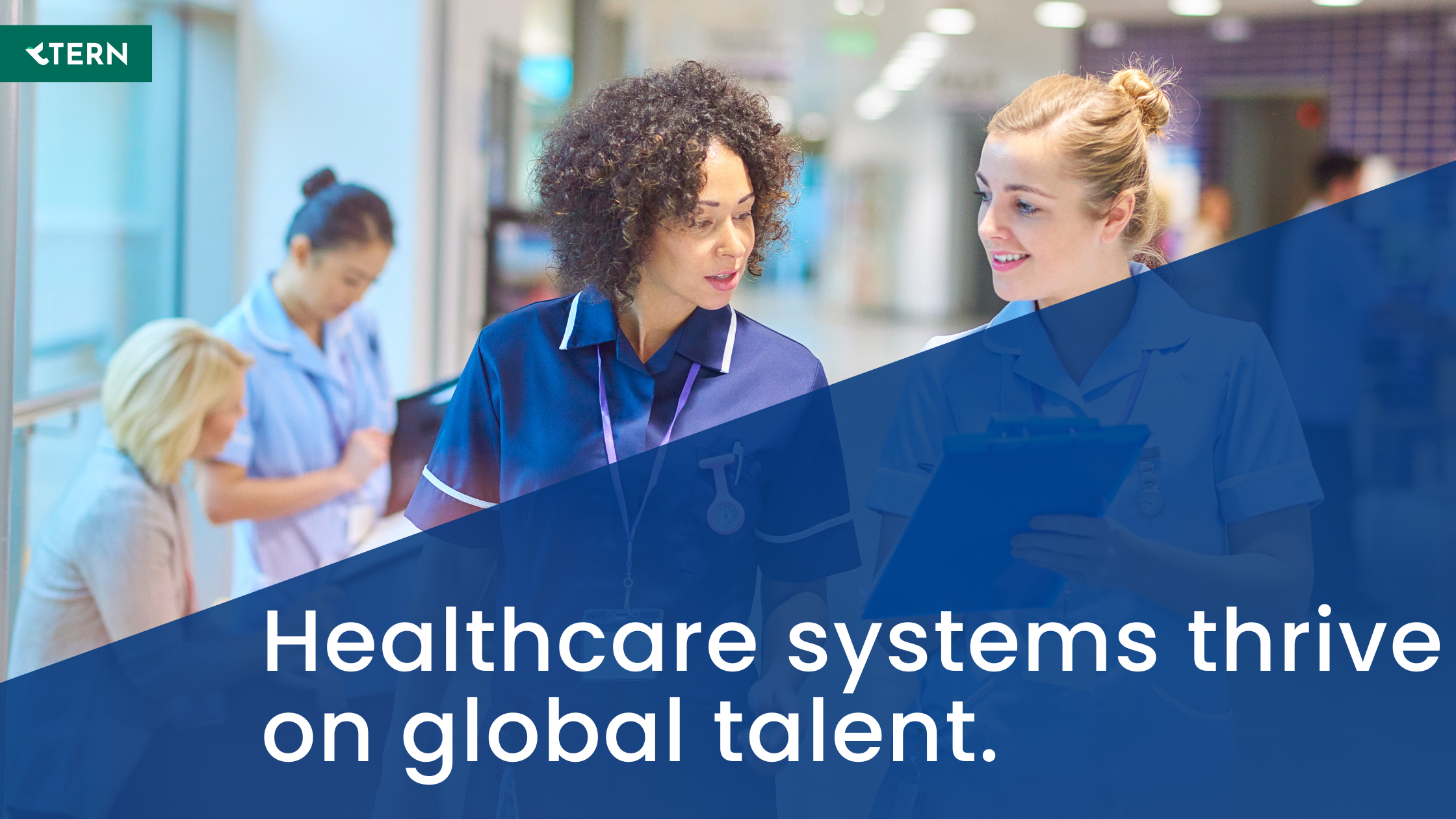
At the same time, the global health workforce shortfall is still projected at ~11.1 million by 2030, even after recent gains, making ethical international recruitment both necessary and sensitive. WHO Apps
Implication: health employers will compete for internationally mobile clinicians; agencies and platforms that prepare talent (language, licensing, integration) will win on quality and retention.
4) Ethics and compliance are moving to center stage
Governments and multilateral bodies are tightening expectations around fair recruitment: fee transparency, contract clarity, credential verification, and worker protection. The ILO’s General Principles and Operational Guidelines for Fair Recruitment continue to anchor many national frameworks and audits. International Labour Organization
Implication: compliance is now a growth enabler, not a checkbox. Ethical pathways reduce drop-offs, prevent reputational damage, and improve 12–24 month retention, especially in high-stakes moves like healthcare.
5) DEI remains a performance lever, even as the conversation evolves
The business link hasn’t disappeared: McKinsey’s 2023 review found that companies in the top quartile for board-gender diversity are 27% more likely to financially outperform, with a similar (though smaller) relationship for ethnically diverse boards. The direction of travel is clear: inclusive teams make better decisions. McKinsey & Company

Implication: global hiring is a practical route to build diversity of skills, languages, and perspectives, but inclusion must be designed into onboarding, mentorship, and leadership pathways to convert diversity into performance.
6) Employee experience is the new retention moat
Engagement is fragile: Gallup estimates low engagement costs ~$8.9 trillion (≈9% of global GDP). In cross-border contexts, the stakes are higher, relocation without community, mentorship, and mental-health support drives churn. ahtd.org
Playbook: personalized onboarding, buddy systems, language support, and clear progression pathways. In other words, treat global hiring as a lifecycle, not a transaction.
7) Upskilling is the passport to mobility
Automation and GenAI are reorganizing work. The winners, employers and candidates are the ones who learn faster. Partnerships between recruiters, employers, and training providers are shifting from “course catalogs” to outcome-tied pathways (e.g., B1/B2 language + licensing + job offer pipelines in healthcare). Expect skills passports and verified micro-credentials to spread.
(For healthcare, think language + bridging + clinical adaptation; for tech, think cloud, data, cybersecurity, and AI/ML micro-certs.)

8) India’s strategic role keeps growing
India remains the world’s top remittance recipient (an estimated $129B in 2024), underlining the scale of Indian professionals working globally. For employers, India offers depth in healthcare, tech, and finance, with high English proficiency and strong learning agility. World Bank Blogs
Implication: for many global teams, India is no longer an “offshore” add-on but a core talent market, for both relocation and distributed work.

TERN’s predictions for 2025–2028
- Quality over Quantity in global pipelines. Employers will prefer smaller, relocation-ready shortlists over mass applications. (Preparation beats posting.)
- Agentic AI in recruiting ops. Expect AI “copilots” to handle document prep, credential checks, interview scheduling, and multilingual candidate comms , with humans owning the judgment calls. Gartner
- Ethics as a buying criterion. Vendor audits will prioritize fee transparency, grievance mechanisms, and WHO/ILO-aligned guardrails, especially in healthcare. International Labour Organization
- Skills passports travel with talent. Digital credentials + verification rails reduce friction across borders.
- Onboarding becomes global care. Retention will hinge on cultural integration, mentorship, and mental-health support, not just relocation logistics. ahtd.org
What great looks like (playbook you can use)
- Design for readiness: language + licensing + relocation support before day one. (In healthcare, this is non-negotiable.) OECD+1
- Operationalize ethics: embed ILO fair-recruitment principles in contracts, fee structures, and partner SLAs. International Labour Organization
- Let AI do the busywork; humans do the hard work: use AI for parsing, scheduling, compliance checks; reserve humans for fit, coaching, and decision quality. Gartner
- Build inclusive outcomes, not just diverse intakes: track promotion and retention across demographics; pair hires with mentors; invest in community. McKinsey & Company
A closing note from how we see it at TERN
Global hiring works when it’s tech-enabled and human-led. The next frontier isn’t posting more jobs, it’s preparing more people. When we do that, borders blur, teams strengthen, and careers accelerate.
Ready to build your cross-border team, or your cross-border career? Let’s talk.


.jpg)


